
A Rural History: North Carolina's Poet Laureate
/
Story by Sandra Davidson Photography by Baxter Miller
Decades ago Paul Green, the Pulitzer Prize winning author to whom Bit & Grain traces our very namesake, lamented the status of the arts in North Carolina and the South. In the 1963 essay "Some Notes on Art and Southern Attitudes," Green wrote, “We have not worked hard enough in the South, in this state, for the right sort of climate to come to pass in which great art, science, literature and philosophy can flourish.” Green recognized that the South’s landscape, complicated history and folklore provided near mythic inspiration for artists of all mediums. He argued that greater regional public and institutional support of the arts would foster creativity, but also that creatives were equally responsible for the cultural climate. “The brash and brutal truth” of the matter, Green wrote, was that artists hadn’t taken advantage of the South’s “rich native lore,” as they should.
This cannot be said of Shelby Stephenson.

A rural history’s mythology
Now breaks unseen within my eyes, leaving
A familiar world consistent tunes
The fall sun shadows green for fodderers
Cutting cornstalks to help the main economy,
Which depends on leaf-tobacco,
And not one worker a slacker;
The grades of tobacco’s certain—
Whittled sticks in holes mark division
While father, mother — Shub — vision—
Daydreams I cannot unburden
Aware I could be called down for shirking—
—Excerpt from Shelby Stephenson’s "Hymn to the Packhouse"
Cricket, Shelby Stephenson’s 13-year-old Norwich terrier, barely leaves his side.
The tiny dog sits effortlessly perched under his arm as Shelby, North Carolina’s Poet Laureate, crosses a lush meadow pricked with birdhouses and enters the creaky rooms of “The Plankhouse,” the three-room home where he was born and spent the first 14 years of his life. He settles into a rocking chair on the front porch of the old home place, as Cricket nestles comfortably onto his lap, in what appears to be a familiar routine for the two.
“I don’t know what I’d do without her,” says Shelby.
He radiates this kind of gentleness.
These moments of connection to home and the things he loves are critical for Shelby. Life is busier now.
Last week marked the first anniversary of Shelby’s tenure as the North Carolina Poet Laureate. As laureate, he’s traveled hundreds of miles across the state to public schools, libraries, Alzheimer patient centers, museums and agricultural festivals to read poems, play old-time music and meet with members of North Carolina's literary community. His job is to promote North Carolina literature and the power of the art itself. “The state has a bird, it has a tree, and now it has a mouth,” muses Shelby.
Shelby was appointed poet laureate in the wake of controversy. In July 2014, Governor Pat McCrory broke tradition and appointed Valerie Macon, a self-published poet, to the state’s most honored literary post without consulting the Department of Cultural Resources and NC Arts Council. The outcry to her appointment — focused on her relative inexperience and disconnection from the state’s literary community — was swift and, within days, Valerie resigned. The Department of Cultural Resources and a literary panel stepped in to lead a traditional search process, and months later the the Governor reached out to Shelby, whose appointment was met with great support.
Former laureate Kathryn Stripling Byer told the News and Observer that, “His poetic voice just flows like a spring. He’s a natural and we really need a voice like his right now with all the divisions we have in this state.”
With a dozen books of poetry to his name, a place in the North Carolina Literary Hall of Fame, and a full career as a college educator and editor, Shelby, a recipient of the state’s highest civilian honor, the North Carolina Award in Literature, has made something of his voice.
The ruckus that preceded his appointment hasn’t fazed him. Shelby and Valerie Macon recently did a reading together, and Shelby says, “I wrote a comment for her beautiful book.”
Shelby lives this kind of gentleness.


Shelby grew up on a small farm in Johnston County that’s been in his family since colonial times. He lives there today. Raised in a primitive baptist church, he spent much of his childhood working tobacco, playing in creeks behind his house and soaking up his father’s stories.
“He was a wonderful storyteller. My father would say, ‘Boy I wish you had known Slobbermouth.’ One of his fox dogs. ‘He could outrun the word of God with a Bible tied to his tail,” says Shelby laughing. “You know how people talk. You listen. I don’t like the word vernacular, but [there are] wonderful, wonderful things that people say. If you write, you can’t be above or below any of this stuff.”
Family, farm life and local dialect permeate Shelby’s work, as does race.
The past is never far from the present in the South, and Shelby understands this. He explores slavery, racism and inequality in much of his work, perhaps because he’s haunted by it. Born in 1938, Shelby grew up working alongside black tenant farmers. He vividly remembers when the black children he worked with had to bus 20 miles to school versus his four.
Shelby says, “I knew every time I got on the bus that there was something wrong about doing this in the name of doing things right...this ‘separate but equal’ stuff.”
A cemetery plot with 17 unmarked graves sits in a field across the road from Shelby’s house. There, his ancestors are buried beside their slaves. Shelby grapples with this legacy in Family Matters: Homage to July, The Slave Girl, a book of poems about July, a slave his ancestors sold in 1851. In the book, winner of the 2008 Bellday Prize, Shelby anguishes over and queries family history, race, poverty and class.
Last week Shelby participated in a Black History Month poetry event in Hillsborough. In recent email correspondence, Shelby wrote, “As I write these things to you I think of Paul Green... he lived his life to help tell the story of inequality."


Greatgreatgrandpap George’s anvil
Fits right between yourshoulderblades.
The money used to buy and sell you
presses into my heart—
I remember—
never eating with “them.”
“They” lived on “our place,”
my father’s boyhood home,
his father’s homeplace;
they slept in the same rooms he grew up in.
So when they came to our shanty
my mother would fix
some plates to take to the porch;
we would talk through the screen;
they would eat their peas and fatback
and my mother took pride in knowing they like her food.
—Excerpt from Shelby Stephenson’s "Your Name is July"
A thick bundle of his father’s papers, stiff and browned from age, hang, strung together with a single wire, on the back of a door in the Plankhouse. Alone, each piece of ephemera reveals little, but as a whole, the cotton receipts and banknotes for the house his father had built in 1952, weave together the Stephenson family story—a Rolodex of memory.
Family pictures, newspaper clippings, heirlooms, awards and books adorn the walls and counters of the Plankhouse and Shelby’s current home, the 1952 brick house that sits less than a hundred yards from the old cabin. Pictures of his beloved wife Nin and her family, hang beside images of Shelby’s ancestors. Nin, Shelby’s editor and music collaborator (the two have made three albums together), lives in a skilled-nursing in Smithfield. Shelby misses her tremendously but is hopeful. “She is still not walking,” says Shelby, ”Though we hope for the miracle that she will.”
Despite the hardship, or perhaps because of it, Shelby is currently working on a book of poems about the small game —rabbits, squirrels and possum— he grew up eating. “I don’t hunt them anymore,” says Shelby. “I’m trying to give back to the animals.”

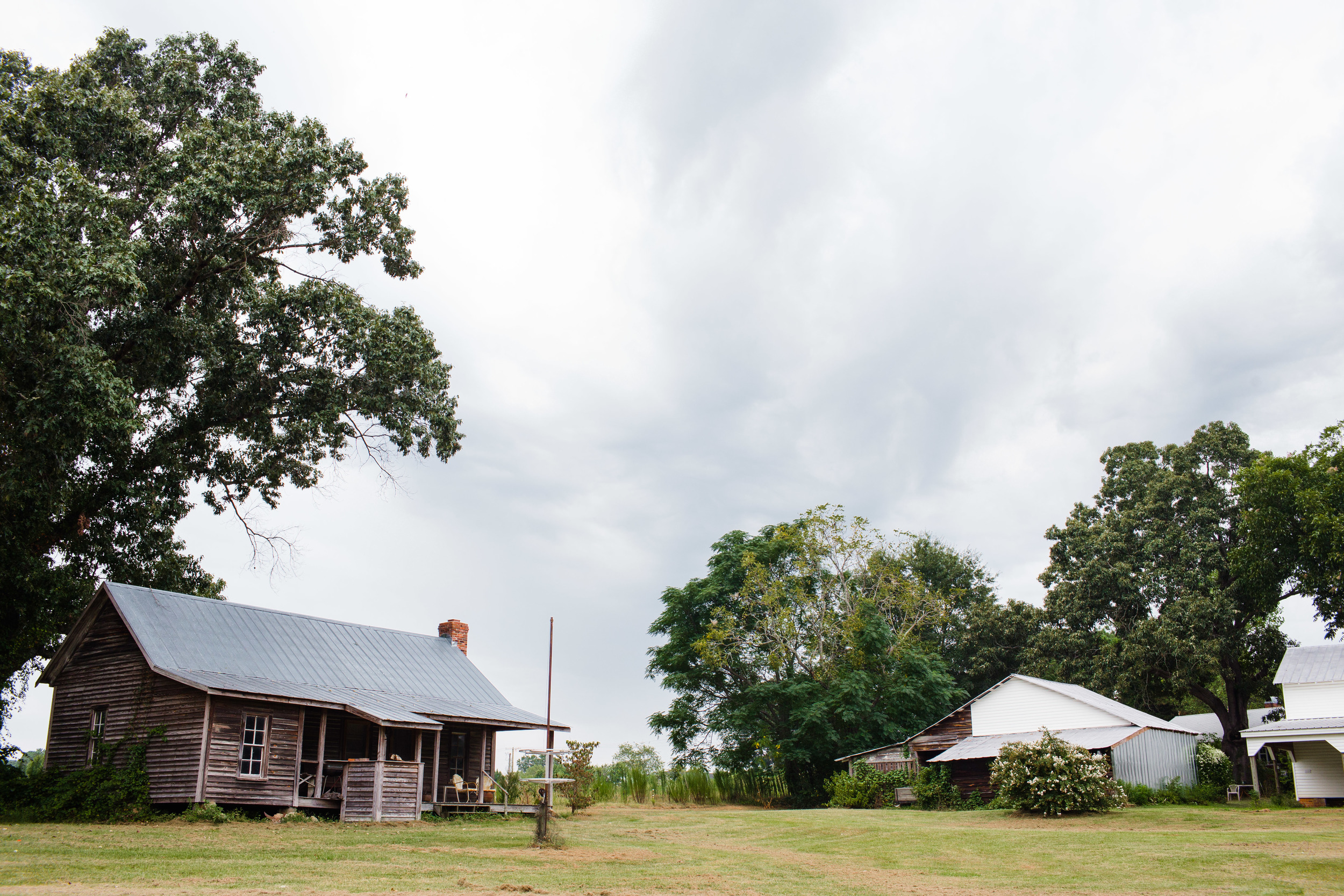


I doubt Paul Green would feel good about the current state of the “arts” in North Carolina and beyond, but I believe he’d feel good about Shelby, a man who’s endlessly inspired by the landscape and people of North Carolina.
“As I go around there are more than 302 tons of people who believe in the imagination and in creative things,” says Shelby. “Can you think of anything worse than to wake up at any age along the way and be bored?”
“It's wonderful to be alive and to know the creative things make us and lead us on.”







Durham-based Phil Cook is much more than a musician. He is a community builder dedicated to creating a thriving and welcoming place in the Old North State.